|
 The
Nakao Ejector™ Biopsy Forceps was invented after a nurse at our
endoscopy unit was injured by a needle stick while trying to extricate
a specimen from a biopsy forceps. The patient was both HIV and hepatitis
B antigen positive. Later that month, an article entitled The Needle
Stick was published in the SGNA Journal, describing the horrifying experience
of Lindsay Sattler, past president of the Society for Gastroenterology
Nurses: "It was an ordinary day in an ordinary endoscopy unit with
a veteran nurse doing an ordinary procedure. The patient who underwent
an upper endoscopy with biopsy was HIV positive with full blown AIDS.
I used a 25 gauge needle to remove the biopsy specimen from the forceps
and place the pieces in formalin. The tissue was sticking to the forceps.
I suddenly stuck my right index finger with that 25-gauge needle…
How could I have done something so stupid? This was really a bad dream.
This could not be happening to someone who had been an endoscopy nurse
for nearly 18 years.” Ms. Sattler was treated with AZT, developed
gastrointestinal side effects, and lived in fear of AIDS for one full
year. She concludes her article: “I hope that this account will
save someone the agony of this experience. It just might save a life.” The
Nakao Ejector™ Biopsy Forceps was invented after a nurse at our
endoscopy unit was injured by a needle stick while trying to extricate
a specimen from a biopsy forceps. The patient was both HIV and hepatitis
B antigen positive. Later that month, an article entitled The Needle
Stick was published in the SGNA Journal, describing the horrifying experience
of Lindsay Sattler, past president of the Society for Gastroenterology
Nurses: "It was an ordinary day in an ordinary endoscopy unit with
a veteran nurse doing an ordinary procedure. The patient who underwent
an upper endoscopy with biopsy was HIV positive with full blown AIDS.
I used a 25 gauge needle to remove the biopsy specimen from the forceps
and place the pieces in formalin. The tissue was sticking to the forceps.
I suddenly stuck my right index finger with that 25-gauge needle…
How could I have done something so stupid? This was really a bad dream.
This could not be happening to someone who had been an endoscopy nurse
for nearly 18 years.” Ms. Sattler was treated with AZT, developed
gastrointestinal side effects, and lived in fear of AIDS for one full
year. She concludes her article: “I hope that this account will
save someone the agony of this experience. It just might save a life.”
 Ms.
Sattler had not done something stupid. Nor had the nurse who was injured
in our endoscopy unit. The fault resides entirely with the design of
the biopsy forceps, which necessitates the use of a sharp to free a
specimen. Indeed, the forceps cup includes a hole specifically intended
for just this purpose. OSHA regulations regarding the use of sharps
are clear, calling for new designs of medical instruments in order avoid
injury. Nevertheless, every time a biopsy is performed, an accident
is waiting to occur. Ms.
Sattler had not done something stupid. Nor had the nurse who was injured
in our endoscopy unit. The fault resides entirely with the design of
the biopsy forceps, which necessitates the use of a sharp to free a
specimen. Indeed, the forceps cup includes a hole specifically intended
for just this purpose. OSHA regulations regarding the use of sharps
are clear, calling for new designs of medical instruments in order avoid
injury. Nevertheless, every time a biopsy is performed, an accident
is waiting to occur.
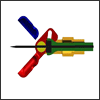
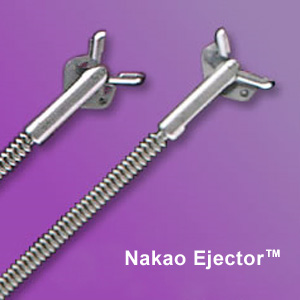
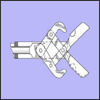
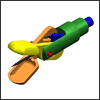
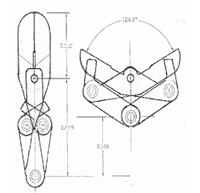
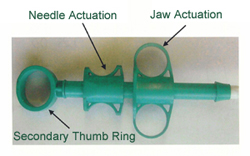
The Nakao Ejector™ Forceps was
invented in order to prevent injury from needle sticks. This new forceps
is designed to release the specimen automatically without the assistant
ever having to touch the forceps’ distal end. This is accomplished
with a small prong co-joined to the cup hinge. When the cups are opened,
the prongs extend into the holes dislodging the tissue. One shake of
the forceps in preservative is required to free the specimen.
Issued Patents
5,049,153
5,575,806
5,573,546
|